
11 October 2005
Busman's Holiday
I thought that late September would be a good time to visit Cornwall for a few days, and of course just had to make a trip to the Lost Gardens of Heligan. I wasn't disappointed, this wonderful, magical garden showed off it's splendour in the late autumn sunshine.
 With the Home Farm, Working Woodland, Orchards, Productive Gardens and beautifully planted Pleasure Gardens there is more than enough to spend a whole day looking at.
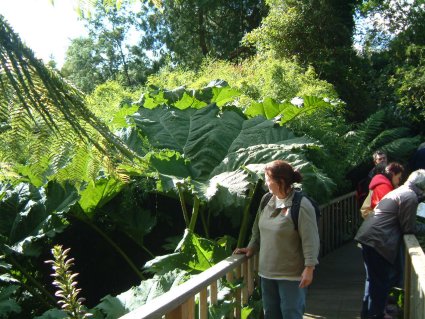
We started walking through the Woodland Walk that runs along the western perimeter, past the mud sculptures and on towards the Jungle Garden. Here we found some of the most beautiful selections of semi-tropical planting including Dicksonia antartica (Tree ferns), giant redwood trees and some of the most gigantic Gunera I have ever seen (see the picture!) The pathways through this area are wooden boardwalks and in places they are both narrow and steep giving a great feeling of adventure.
In the Northern Gardens, originally the Victorian kitchen garden and the gardens closest to the House, are a number of walled areas and these have all been planted generally as they would have been during the hey-day of the house and garden (pre 1914/18). September saw a veritable Harvest Festival of produce in the garden, more varieties of squash and pumpkin than I knew existed along with winter vegetables almost ready for the cooking pot!
The flower gardens were ablaze with Chrysanthemums, Rudbeckia and Asters, along with a number of flowers grown specifically for cutting and arranging during the long winter months such as Helichrysum.
Everywhere in the Gardens you are reminded of the ingenuity of the Victorian gardeners, from the South facing Melon Yard that includes the Manure Heated Pineapple Pit to the shaped wall protecting the bee boles (ancient bee hive pots) that were an intrinsic feature of a productive nineteenth century garden.
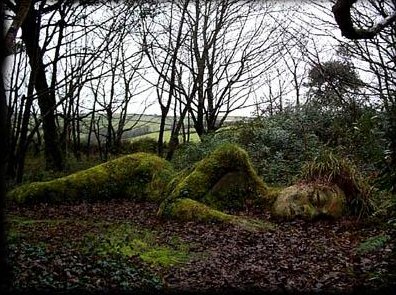 The history of Heligan is almost as interesting as the garden itself - The Squires Tremayne built up the vibrant and almost self-sufficient estate over some 150 years of year-round management, along with plant collecting that was so fashionable during the era. However, Heligan's watershed was the period of the Great War (1914/18) when many of its staff enlisted and of those, few were to return at all, let alone to their former occupations on the estate. The house itself was offered for use as a convalescent hospital for shell-shocked officers, and thereafter was tenanted out. The garden was ignored for many decades and when in the 1970's the house was detached from the estate the garden could have been lost forever. Luckily for us in 1990 Tim Smit and John Willis (who had recently inherited "the gardens") set about exploring and subsequently restoring the gardens, not as a tribute to the "Gentry", but to the working men and women who along with the pioneering spirit of the Tremaynes left such a legacy of plant knowledge and husbandry. Let me recommend it as a worthwhile and interesting day out.